Thursday, June 13, 2013

Reflections After One Month

1 - Planning is important. Plans are worthless.

Dreams made during the winter turned into plans drawn out on whiteboards which turned into what I thought was my idealized plan. HA! Just about everything other than the general place each container on the roof was put has been dramatically altered. The upside is that by creating my ideal garden, I was able to make notes about which plants like which soils and what plants make the best and worst neighbors for other plants. Also, it was important to quantify how much compost was needed (I actually overestimated how much was needed) and how many containers, soil, etc was needed (I dramatically underestimated). Thankfully, the skills that I have learned allowed me to quickly adapt my plans and things seem to be back on track. Will I again fantasize and plan this winter for next year? Without a doubt, but hopefully, I will be more informed about the materials needed. Also, I should have far more of the materials (composted soil, seeds, containers, etc) already on hand cutting down on the frustration of purchasing way more items that I originally thought that I needed.

2 - This is a situation where size does matter.

A month ago, I was able to find a plot in a nearby community garden and was over the moon. I was thinking that I would be able to use that plot to grow larger items that I didnt have room for on the roof (full-blown corn and mammoth sunflowers) and plants being grown just for canning (tomatoes for chutneys and pasta sauce). In the interim, I became an apprentice at the Bushwick Campus Farm which requires me do classes/work at the farm for one day a week. Through that program, I excitedly joined the team working on a nearby rooftop to expand our farm operations. Soon after, I found another nearby community garden where there were not any plots available for me to use, but I have been helping out some of the plot farmers (Hi, Danielle!) there and am developing a neat worm composting system for their garden.
Alright, so when I sit down and think about my commitments, it is at least one day a week at the Bushwick Campus Farm. Probably, half a day a week at the other rooftop project. One day every other week at the local community garden. On top of about an hour a day on my rooftop. When I circled back to my community garden plot and stared at the dreadful condition of the plot, I just couldnt get the motivation to double-dig and rush to germinate the seeds to plant there. So, my other option would have been to just slightly till the land and invest even more money in buying plants. After some reflection, I decided to let this plot go. Now, other than my own rooftop garden, all of the other current projects are ones which I do with other people.
Before this growing season, gardening was pretty much a solo hobby for me. Having now gotten involved with other people, Im realizing that having a community brings me more enjoyment than I thought that it would, so Im going to focus my time and energy developing deeper relationships there. An added benefit being that others who garden on their roofs have volunteered their excess space so I will hopefully be able to grow extra tomatoes and cucumbers on their roofs.

3 - Shortcuts have consequences

A - Through some fluke in the universe, I had commitments which had me away from Brooklyn for the month of April (college reunion, coachella, wedding in Thailand), which turned out to be an awesome time but with consequences for my garden. A good friend of mine was able to come over about twice a week to water my plants under my growlight. Those survived well, but the seeds that I was starting did not.
B - I was enticed by an offer by a company (which will go un-named) to get $25 off an order of $50. I asked the telephone operator if their plants/seeds were organic, and she answered "of course." Later, once I was able to think clearly, it became clear that she must have been confused. I have never heard of an organic company which did not tout this. They cant just call themselves organic, there are different groups that verify every aspect of their operation for them to use this designation. So, yeah those plants are not organic, but will be grown an organic way. Next, the order was shipped weeks later and of course came while I was away. A new screwup with the postal service had the mailperson missing the note to leave the package with my neighbor. So, the post office held the package for a week and then shipped it back. So, I get back home and wasnt even able to receive my non-organic seeds and plants. Frustrated, I call the company and explain the situation. The telephone operator understood that neither party did nothing wrong, but she shipped the order again for free. YAY. Somehow that order got messed up and I got one item of 8. Four calls later, they realized the mistake and finally was able to reship the order...minus the strawberry plants as they were out of them. I was honestly seeing red at this point. I am a big believer in buying from local family-owned businesses when possible and here I went for the flashy sale price and paid the price for it. At the same time, I found another online seed company which I believe in and have had much much better interactions with - botanicalinterests.com (affiliate alert - I get a small kickback from the company if you buy from them, but I honestly believe in the product. Do note that not all of their offerings are organic if that is important to you). Also, I have had good results focusing on specialist for certain plants like www.tatorman.com for sweet potatoes (not an affiliate, but nice Southern folk with a really good product).
C - So after those two failures, it is May. Im back in Brooklyn. I thought that I would be planting out a ton of plants, but NONE were ready. I spent a little money buying some plants so that I could have SOMETHING to look at on the roof and started a ton of other plants from seed. The problem this time, I was out of seed starting soil, so I used vermicompost to start the soil. The logic being many many people swear by the magic of adding a little vermicompost into the hole that you put your seed in, so obviously germinating the seed in the vermicompost will speed the process up, right?! Wrong! Two weeks later, seeing no germination I touched the containers and realized that the worm poop is way way way too heavy for the seeds. Good seed starting mix is super light keeping the seed moist without being saturated. Lesson learned.

Now, with a clearer head and an acceptance that most of the plants will still have time to make it to harvest but some will not. Things finally seem to be on track.

4 - Work with your environment

I knew that the three main issues I was going to have to deal with on the roof were: the heat, the wind, and issues with watering. This is one area where planning was very helpful. Heat - only grow plants that thrive in the heat and use areas with a lot of shade for plants that dont like a lot of sun/heat like lettuce. Wind - use containers with heavy filler weigh them down. Water - use self-watering containers where possible to cut down on watering. The only issues here have been the torrential rains that we have been having actually forces me to dump out the water in the container water reservoirs since most plants like to dry out between watering. I wish that I realized potential for the plants flooding in their containers before I lost a tabasco pepper plant, but hey lesson learned. The wind turned out to be more powerful than I thought, so I had to remove the trays in the TOWER since a tray once flipped over.

5 - No man is an island

Another benefit of getting more involved with the larger gardening community, I have been able to find a ton of new resources. One guy in the area raises chickens, and so I have been able to get free manure from him. I have gotten over my aversion of buying plants/seedlings which I could have grown myself to jumpstart my rooftop garden. Also, others have shared many tips/tricks for rooftop gardening which I will be trying out.

Thats all for now. I hope yall enjoyed reading. Feel free to share what lessons you have learned so far in this growing season.

- Monti

Tuesday, June 11, 2013

How to Make a Super Easy DIY Container from a Large Barrel

Since I was able to acquire a couple barrels, I wanted to make some large containers that I could use to grow my sweet potatoes and blue jade corn. I also used one of the barrels to make a composter.
Im not sure about other cities, but it is easy to find barrels of this size in NYC for about $30. It is important that it is food grade or has not been used before as you do not want to eat anything grown in something with trace toxic stuff hanging around.

Finished product

DIY Containers from A Large Barrel

You will need:

- Drill
- Saw/jig saw
- Cleaning solution
- Measuring tape
- Protective eyewear

Steps:

1 - Use a cleaning solution to thoroughly clean both the outside and the inside of the barrel.

2 - Use measuring tape to find the middle point on the barrel.

3 - For my jigsaw, I needed to drill a hole on the line where I wanted to cut.

4 - Put on protective eyewear and carefully use the saw to cut the barrel in half.

5 - Carefully, drill 1-inch drainage holes in the bottom of the containers. I also like to do a drainage hole in the lower side of the container as well for extra drainage.

Notice the drainage on the side.

Hope this helps!
- Monti

Wednesday, June 5, 2013

(Belated) Weekend Work Day Update

I was able to squeeze in another work day this weekend. First up was filling out the larger containers that I made a couple weeks ago. This planters were made out of large water barrels and were crazy easy to make. Ill include the instructions in my next update as this one was getting a little long.

Trip to Rose Red and Lavender

I should have taken a picture of the oasis that they have, but I was a bit focused on what I needed to buy. This place had (almost) everything that I was needing to buy. And they delivered to my building for $20!
Any place that offers tea made with freshly picked herbs from their garden and sweeten with honey from their bees is alright with me! If you are looking for plants, floral arrangements, or just a really helpful staff to help you with your garden, please check them out at - -http://www.roseredandlavender.com/

Work Day over the Weekend

Three bags of soil, styrofoam to use as filler, chicken manure, blood and bone meal. Obligatory glass of wine.
The delivery guy helped me get to the stuff to the roof, so we were able to do it all in one trip.The soil was added to the planters that I made earlier and I was able to plant out the sweet potatoes and fill up some of my other smaller containers. Ill do a final workday this weekend to finish planting out the vegetables and cross my fingers that everything matures before our first frost.


Next, came filling in the planters with some of the awesome soil and topping off with a little blood meal, bone meal, and fertilizer. After mixing it all in and heavy watering, we are ready to transplant the sweet potatoes.

Adding a little bone meal, blood meal, and fertilizer to my planters.

With that completed, I was able to focus on topping off the soil in some of the other containers and transplanting other plants. Then, it was time to relax with that glass of wine and the sunset. More to come later!

- Monti


Thursday, May 30, 2013

New Plants and Farmers Market Info!

Clockwise: Mint, Tatsoi, Paul Robeson Tomato, Cinnamon Basil, Brandywine Tomato, and Purple Mizuna


More Plants

On Wednesday, I stopped by the Bushwick Campus Farm (disclosure, I am an apprentice at the farm) to pick up some more plants. See those beauties above. This means that Im about 50% of the way to my plant goal for the season. This weekend, Ill be picking up a lot of soil and will transplant them into containers on the roof.

Bushwick Campus Farm, Ecostation:NY, and Bushwick Farmers Market

Everything from beans to peppers to lettuce being prepped for the Bushwick Farmers Market

You can find out more about The Bushwick Campus Farm at http://ecostationny.org/BCF/ or https://www.facebook.com/pages/Bushwick-Campus-Farm/219482024759889. Better yet, come to the first farmers market of the season on Saturday, June 1 at Maria Hernandez Park. Ill be there volunteering during part of the event helping to sale our beautiful plants. You can find out more about the market here - http://www.bushwickfarmersmarket.org/.

One of the many lettuce varieties for sale from the Bushwick Campus Farm


And Then The Universe Rewards Me


After about 8 hours of back breaking work, I was crazy exhausted when I got home. I try to spend at least an hour a day on the roof communing with the world and my growing garden. I forced to go up there exhaustion and all (with a rum and coke and some freshly picked mint) and was rewarded with the view you see below. I never cease to be amazed by the universe!

See Manhattan in the horizon?

Wednesday, May 29, 2013

Pepper Protection with an Easy DIY Organic Fungicide Spray!

One fact that every new gardener should know is that the mistake that most people make in the beginning is actually OVER-water rather than under-watering. Your plant only needs about 1 inch of water to get down to its roots every week. Indoors, this means that they should be able to go at least a week with a solid watering if you have them in an appropriate size container.

With peppers (and tomatoes and cucumbers and eggplants) the issue that we have to work out for is a fungus that emerges when the plant is in soil that is too wet. (I want to keep this blog jargon-free, but you can find a more scientific explanation and information here - http://vegetablemdonline.ppath.cornell.edu/factsheets/Cucurbit_Phytoph.htm) This fungus can rapidly spread from the leaves to the stem to the root. Once it has attacked the roots, it is game over for your plant and you could discard it and the soil.

It isnt all Debbie Downer news today, though. There is something that you can do most of the time. Be PROACTIVE. A simple spraying of the stem and leaves with a basic fungicidal spray after heavy rains are advised. The one that I make for my peppers and tomatoes is a little different from most that you will find online since I add a little garlic oil to keep pests away. The reason? Pests seem to be able to sense the weakness of your plant and will attack like crazy. The garlic oil should keep them at bay. Try the recipe below and let me know how it works.


EASY DIY Organic FUNGICIDE SPRAY

Ingredients:

- 1 tablespoon of Baking Soda
- 1 tablespoon of dish detergent (an organic soap is ideal if you are going to be eating the plants in question)
- 1 tablespoon of garlic oil
- 1 Gallon of water

Directions:

Simply mix the ingredients together and add to a sprayer. Spray directly to the tops and bottoms of leaves and stems after heavy rains. Should also be used at least once a week whether yall have had heavy rains or not.

Will update with images these evening.

Enjoy!
- Monti

(Updated on May 30th, 2013 to add image)

Tuesday, May 28, 2013

Sweet Potatoes Have Arrived!

Sweet potato plants fresh out of the box.

While the Memorial Day weekend is normally seen as the "official start of the summer" here in the US, this year it was crazy cold outside, which meant a weekend of cookouts turned into a weekend of garden projects. First up was going to the post office to get the sweet potato plants that arrived on Friday. Getting plants in the mail is always nerve-racking (will they make it in time? what if they get lost in the mail? will they be able to handle a week in transit?!), but this time they arrived looking fairly normal.

So, first we should do a little fun fact. Sweet potatoes are tropical vine which are actually more related to peppers than "regular" potatoes (fact check it! http://en.wikipedia.org/wiki/Sweet_potato). As such, they will die if the weather gets below 50 degrees. Since it was crazy cold here, I decided to give my plants a little TLC before putting them out in the big bad world.  Here's how I did it.


First, I separated each plant and composted the rest of the material that they were sent with.

Second, I filled up some easy DIY containers with organic seed starting mix with a top thin layer of worm compost (which, I think has magical powers in the garden). Some add sand here too as drainage is really important for sweet potatoes.

Third, just simply eased the plants into the soil and put the container under the growlight. Ive found that a super easy way to make a hole for the plant to go into is just to use a pen to make the holes.


Sweet potatoes on Day 1. Notice how droopy the stems and leaves are.

Fourth, water water and water again. When using a new container, it often takes a couple times for the water to make contact with all of the soil. I tend to water three times in 15 minute intervals allowing all of the excess water to exit through the bottom. Water is very important especially for mail order plants as they tend to be a bit wilted and the water will fix that.

Fifth, dead head the dead leaves. 

Sixth, put the plants in a window sill or under a grow light.

Plant leaf on day 2. Notice that it isnt as droopy!

On Monday, we finally got a nice day outside so I took them out during the day and brought them back in at night. Ill continue doing this for the next week before I finally plant them outside.

Thanks so much for reading!
- Monti

Friday, May 24, 2013

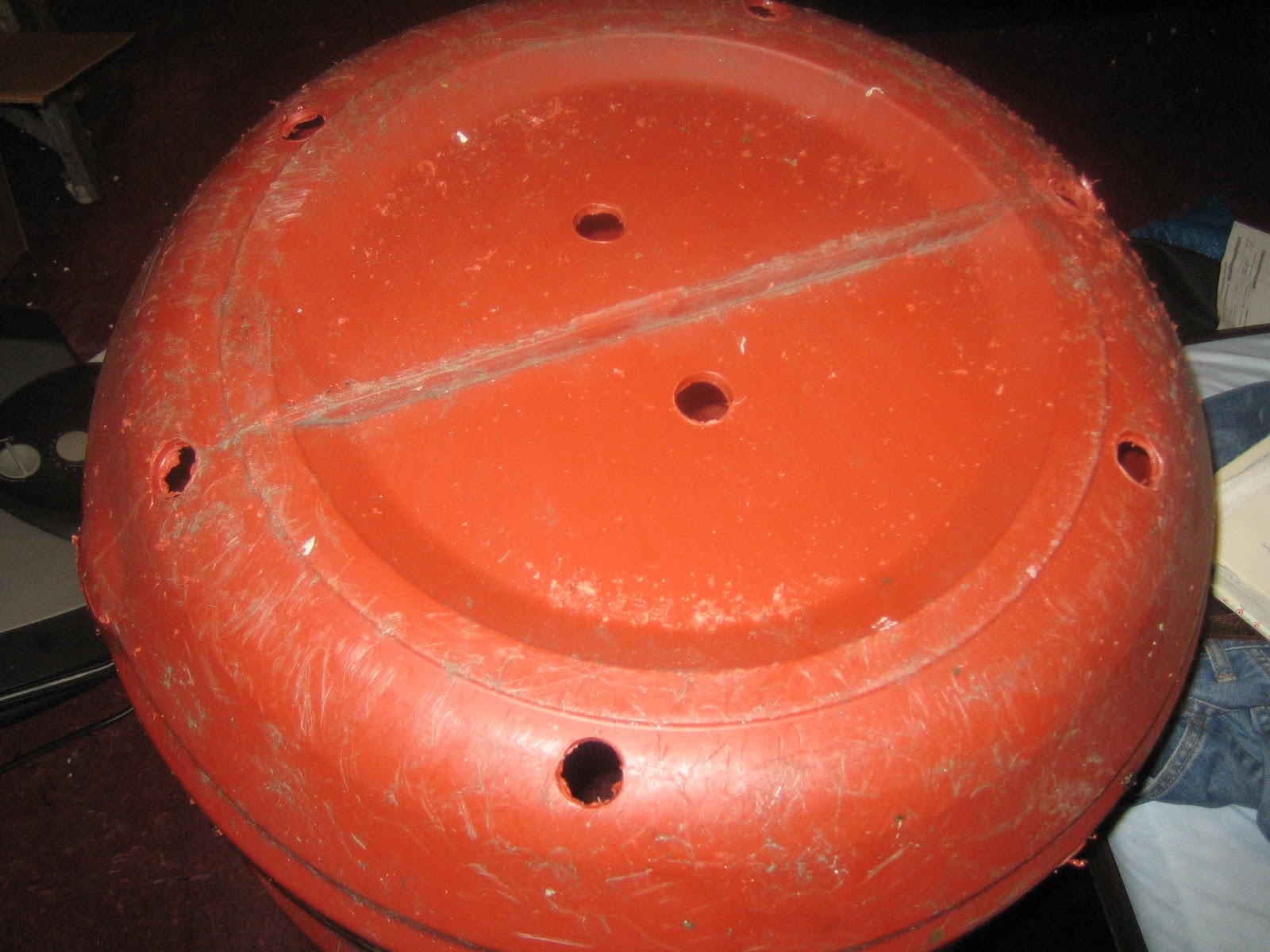
Super Easy DIY Compost Bin Using A Large Barrel

 This is a situation when my hardheadedness worked against me. All of my research suggested that I have two compost bins. One for collecting compost and one to "work." Of course, I didnt listen so now I have a bin that is humming along but with about a third of the stuff new items that are going to take far longer to finish. Hence, the need for a second compost bin (and an annoying task this weekend of stiffing through the first pile to take out the newest additions.

First compost bin. I happily acquired him for no cost from
someone on www.freecycle.org
New compost bin I made in less than 30 minutes. Minus the top
and the wooden pallet below.

As I "acquired" three large barrels, I wanted to use one to make a quick and easy compost bin in less than 30 minutes.

You'll need:


  1. Large "Food Grade" Barrel
  2. Cleaning Solution (I use vinegar, lemon juice, and peppermint soap)
  3. Drill
  4. 1-inch spade bit

Steps:


  1. Acquire your barrel. Food-grade is ideal, but as long as you know what was in it before and it was not toxic then it should be able to be used. Remember that anything in this bin will end up in your soil, which will end up in what you grow, which will end up in your body. Be smart.
  2. Wash your barrel inside and out with your cleaning solution.
  3. Using your drill and 1-inch spade bit drill from 5 to 10 holes in the bottom of the barrel.
  4. Drill 16 holes on the sides of the container.


   5. Drill 4 to 10 holes on the top of the barrel.

   6. Load up your new composter!


Final Tips:


One of the benefits of using a round barrel like this is how easy it is to lay it on its side and roll it around to mix everything around. If you are going to be using this on your roof, I advise that you elevate it in some way. Wooden pallets are always being left for trash pickup in Brooklyn so that's what I use.

Anyone else made their own bin? How did yall do it?

Happy Holiday (aka hardcore garden project) Weekend!
- Monti